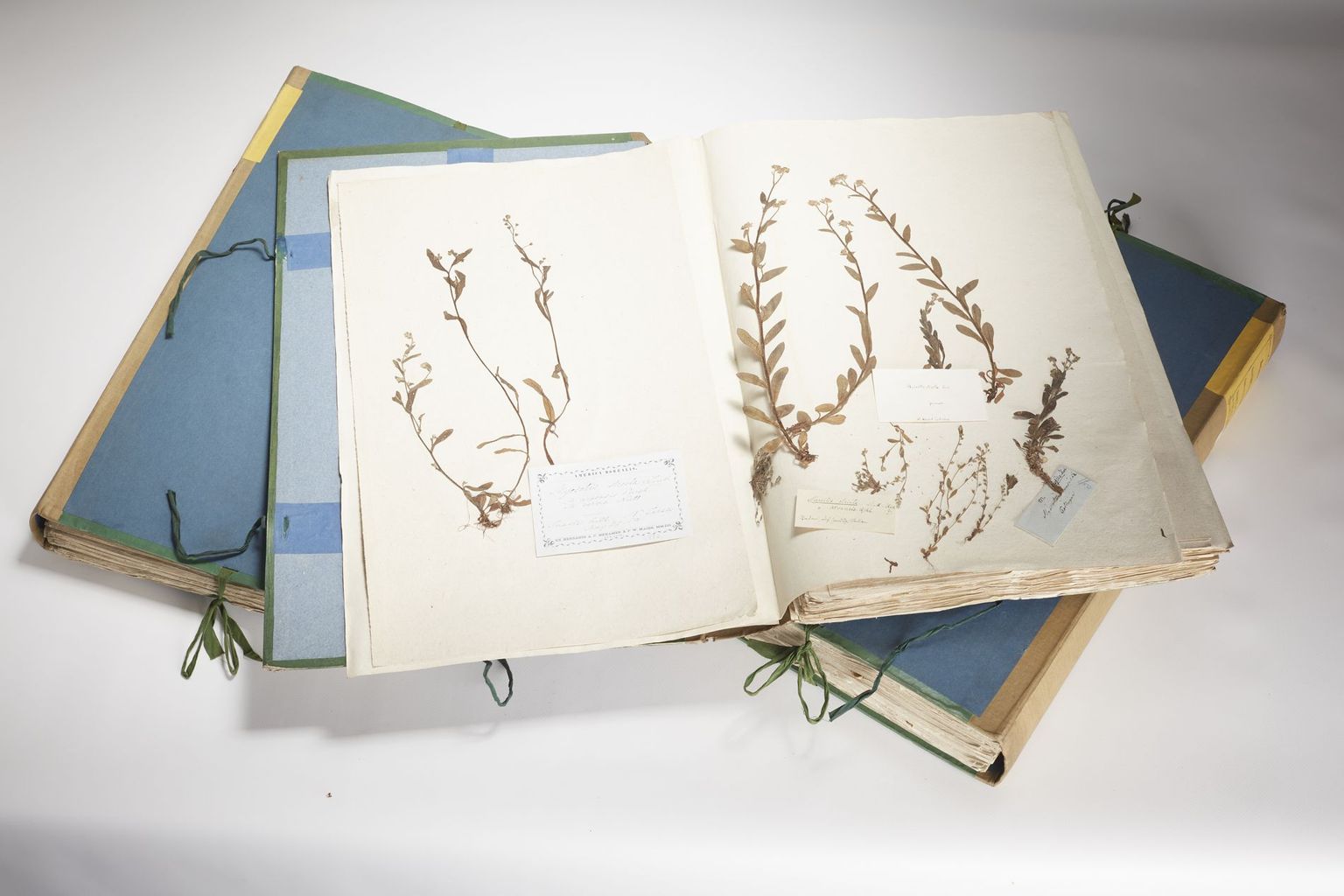
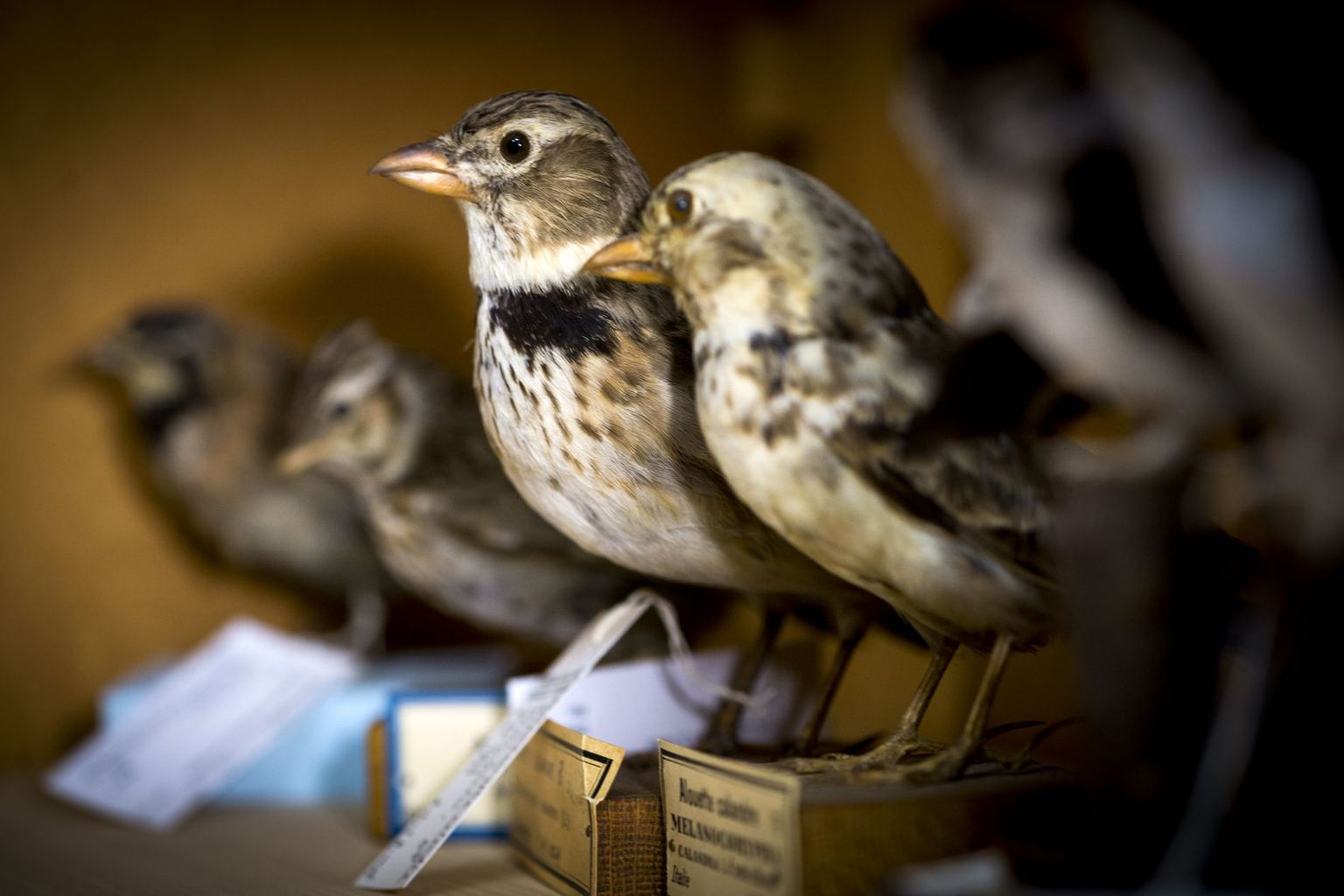
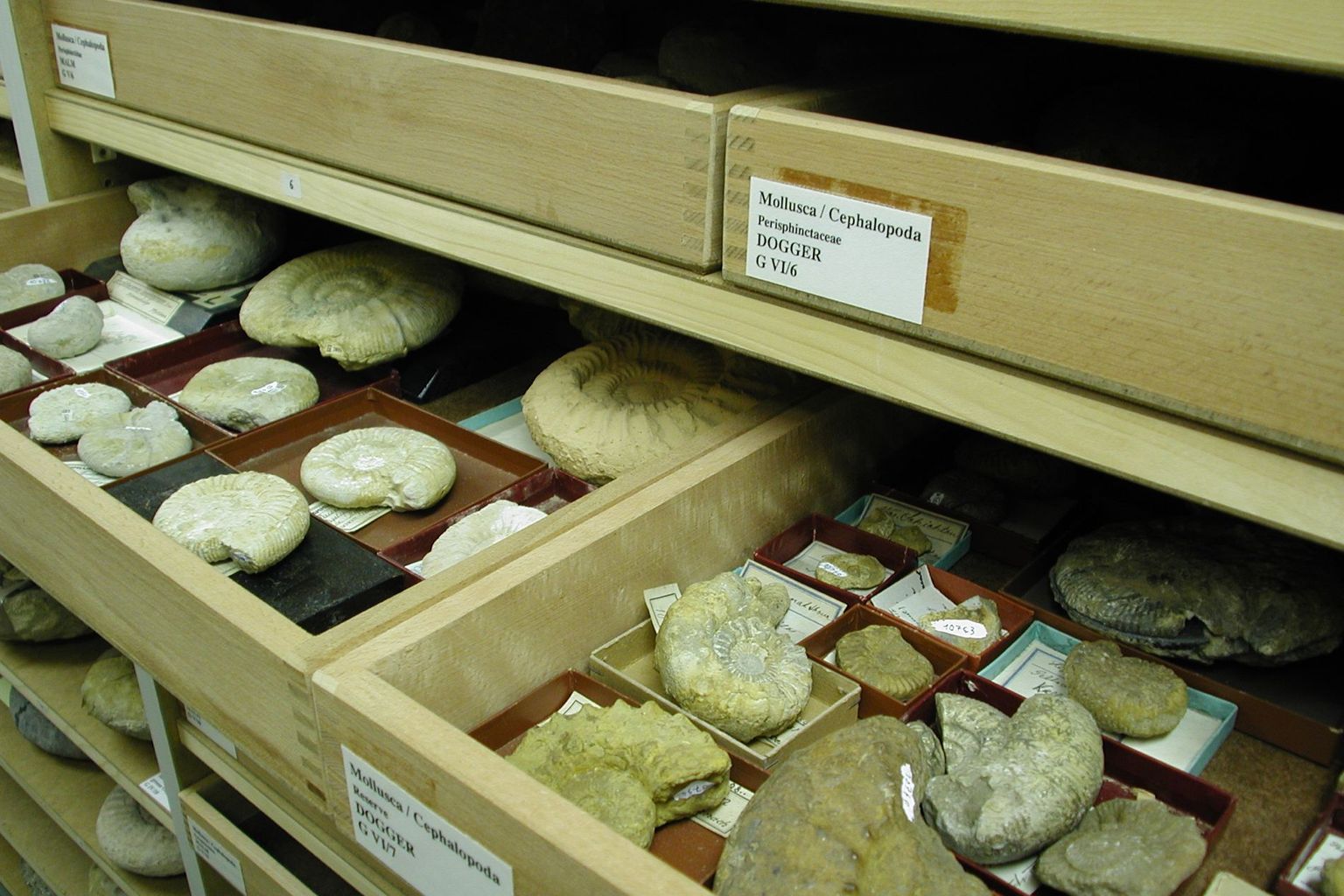
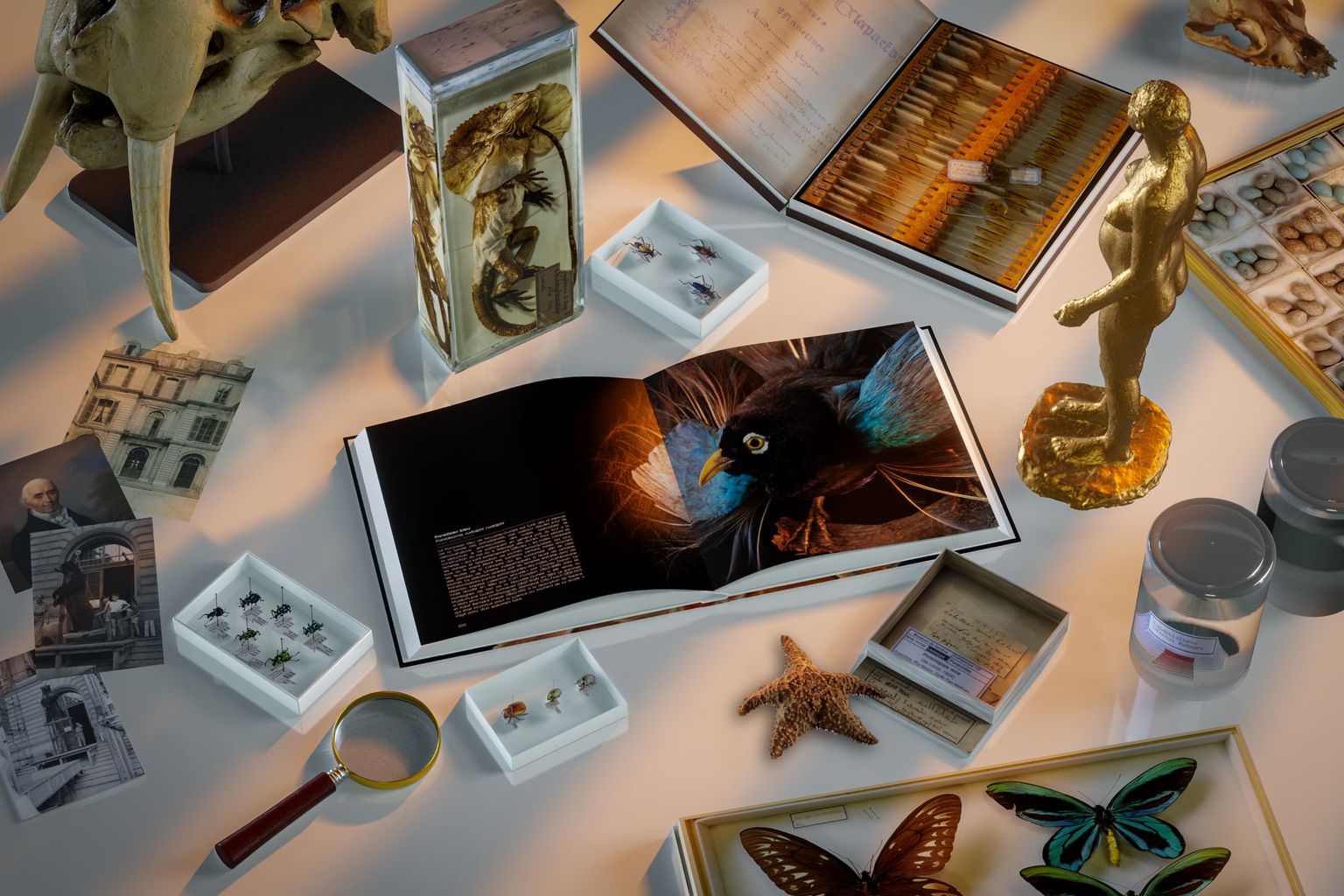
SwissCollNet s’engage à améliorer l'accessibilité de ses collections. Une vision commune et une stratégie à long terme favoriseront l'utilisation des collections d'histoire naturelle pour la recherche, l'enseignement et la société.
Image : OscarLoRo, stock.adobe.com
Geology and Mineralogy
In geology, 3 projects were carried out. One project focused on meteorites, another one on type minerals and one last more techincal project aimed at integrating geoscience collections into the collection management system software Specify.
Objects processed in geology and minerlaogy projectsImage : SwissCollNet
Integrating Geoscience Collections into Specify Software Beda Hofmann (Naturhistorisches Museum Bern), Alexis Beck (Natural History Museum Geneva), André R. Puschnig (Natural History Museum Basel), Gilles Borel (Naturéum, Lausanne)
Summary
Curators of Earth Science collections in Swiss museums and worldwide use a variety of electronic databases for the inventory of minerals, rocks, meteorites, gems and related objects in their collections. For paleontological collections (fossils), databases closely related to those used for biological collections are used, but for the inventory of non-biological collections a generally accepted solution fulfilling all requirements is currently missing. „Specify“ is an open source software widely used for biological and paleontological collections, but still lacks the ability to handle other Earth Science objects. In the frame of this project the four largest Natural History Museums of Switzerland together with the Specify Collections Consortium (University of Kansas, USA) will develop and test a “Specify Geoscience Platform”, an extension of „Specify“ for Earth Science Collections. The integration of Geoscience Collections into Specify Software will be a key step in homogenizing database contents for Earth Science objects, starting with the four museums involved (Bern, Basel, Geneva, Lausanne), and will initiate further collaborations among other museums allowing an integration of the Earth Science collection contents into unifying databases like the Swiss Virtual Natural History Collection (SVNHC) or GeoCASe.
Perennial conservation and fully digitisation of type minerals specimens of Musée cantonal de géologie, Lausanne Nicolas Meisser (Naturéum, Lausanne), Marco Antognini (Museo cantonale di storia naturale Lugano), Beda Hofmann (Naturhistorisches Museum Bern)
Résultats
Tous les spécimens traités:
Reconditionnés
Saisis dans la base de données
150
1'206
Numérisation des spécimens "type"*:
60 reconditionnés.
71 saisis dans la base de données de l'institution.
* spécimen de référence permettant de nommer et décrire une espèce
Résumé
Les êtres vivants constituent la biodiversité avec près de 2 millions d’espèces découvertes ; les minéraux constituent la géodiversité de la Terre, de la Lune et des météorites mais avec seulement 5'863 espèces décrites (Novembre 2022). Ces minéraux, sous la forme de cristaux, composent les roches et les minerais utilisés depuis la naissance de l’humanité. Ils fournissent les éléments chimiques nécessaire aux civilisations : or, cuivre, fer, aluminium, uranium et maintenant lithium et terres rares pour la transition énergétique en cours. L’existence de minéraux sur Terre évolue avec le temps géologique et même avec les activités humaines. La découverte d’une nouvelle espèce minérale est toujours importante, car son étude permet de mieux comprendre une petite portion de l’histoire de la Terre. L’homologation d’une nouvelle espèce minérale nécessite une étude qui est soumise au vote d’un comité international de spécialistes. Les échantillons étudiés, appelés types minéraux, doivent être obligatoirement conservés dans un musée. Ce projet vise à préserver, selon des techniques modernes, et à numériser les types de minéraux du musée de géologie de Lausanne. Les techniques qui seront ainsi développées profiteront aux autres musées suisses qui possèdent de tels objets. Ce projet jette les bases d'un catalogue complet, accessible en ligne, des types minéralogiques des musées suisses et décrit les techniques de conservation durables de ces précieux échantillons.
Diffusion
Publications
Biagioni, C., Roth, P., Reynes, J., Robyr, M., Meisser, N. (2024) Zanelliite, IMA 2024-061, in IMA Commission on New Minerals, Nomenclature and Classification (CNMNC) – Newsletter 82. European Journal of Mineralogy, 36 (6). 1005-1010, https://doi.org/10.5194/ejm-36-1005-2024, 2024.
Kürsteiner, P., Reynes, J., Soom, M., Meisser, N. (2024) Dopplerit, aus dem Torfmoor von Gontenbad AI - ein Mineral? Berichte der St. Gallischen Natuwissenschaftlichen Gesellschaft, 95, 319-331, https://naturmuseumsg.ch/wp-content/uploads/2024/12/Kuersteiner-et-al-2024_Dopplerit.pdf
Malcherek, T., Mihailova, B., Schlüter, J., Roth, P., Meisser, N. (2025) Metaheimite, IMA 2023-020a. in: CNMNC Newsletter 83, Eur. J. Mineral., 37, https://doi.org/10.5194/ejm-37-75-2025, 2025.
Malcherek, T., Mihailova, B., Schlüter, J., Roth, P., Meisser, N. (2024) Heimite, PbCu2(AsO4)(OH)3·2H2O, a new mineral from the Grosses Chalttal deposit, Switzerland. European Journal of Mineralogy, 36, 153-164, https://ejm.copernicus.org/articles/36/153/2024/
Plášil, J., Steciuk, G., Sejkora, J., Kampf, A.R., Uher, P., Ondrejka, M., Škoda, R., Dolníček, Z., Philippo, S., Guennou, M., Meisser, N., Rohlíček, J., Mees F. (2025) Extending the mineralogy of U6+ (I.): Crystal structure of lepersonnite-(Gd) and a description of the new mineral lepersonnite-(Nd). Mineralogial Magazine, accepted April 18, 2025.
Plášil, J., Steciuk, G., Škoda, R., Sejkora, J., Dolníček, Z., Meisser, N., Ansermet, S., Slotta C. (2025) Extending the mineralogy of U6+ (II.): Barronite, a new uranyl silicate related to weeksite from Menzenschwand, Germany. Mineralogial Magazine, accepted April 18, 2025.
Plášil, J., Steciuk, G., Škoda, R., Sejkora, J., Dolníček, Z., Meisser, N., Ansermet, S. and Slotta, C. (2024) Barronite, IMA 2024-053. CNMNC Newsletter 82, Mineralogical Magazine, 88, https://doi.org/10.1180/mgm.2024.98
Evénements
Talk by Julien Reynes at the mineral show of Sainte-Marie-aux-Mines, entitled "Perennial conservation and digitization of the type minerals collection of the Muséum Cantonal des Sciences Naturelles à Lausanne (SwissCollNet project)".
Talk during the Munich mineral show in late October 2023.
Talk during the "Day of the collections" in January 2024.
Couverture médiatique
N. Meisser was invited by the RTS radio for the CQFD podcast on 5.06.2024 to talk about this discovery https://www.rts.ch/audio-podcast/2024/audio/l-heimite-le-mineral-cameleon-qui-revolutionne-la-geologie-28527963.html
Meteorites in Institutional and Public collections of Switzerland Matthias Meier (Nature Museum St. Gallen), Beda Hofmann (Natural History Museum Bern), Sandra Scherrer (Nature Museum Winterthur), Henner Busemann (ETH Zürich), Christian Sprecher (Naturama Aargau), Christian Püntener (Natural History Museum Fribourg), Edwin Gnos (Natural History Museum Geneva), André Puschnig (Natural History Museum Basel), Silvan Thüring (Nature Museum Solothurn)
Results
Revised
Databased
Scanned or photographed
51
895
7'599
Summary
Meteorites are true extraterrestrials – pieces of other worlds. Researchers use them to gain and publish fascinating insights into the formation and history of the solar system, including Earth itself. Many museums and universities in Switzerland have small collections of meteorites, which are often in poor shape, in particular in smaller institutions. For example, these meteorites do not have modern names, classifications, and are often not stored in an ideal way. Some very rare and scientifically important meteorites from these collections go unnoticed for decades because no one knows about them! Therefore, the goal of this project is to create a digital, central inventory of all meteorites in institutional and public collections in Switzerland, so that these meteorites become accessible for scientific research. Another goal of the project is to help museum curators to take good care of their meteorite collections. For these purposes, a researcher will be sent to all museums and universities with meteorite collections to compile a complete and modern inventory. The resulting data table will be published Open Access (free to read) in a scientific journal and integrated into the future “Swiss Virtual Natural History Collection” (SVNHC) once it becomes available.
Outreach
Eschrig, J., Meier, M.M.M. and Hofmann, B.A. (2025), A complete inventory of institutional and public meteorite collections in Switzerland. Meteorit Planet Sci. https://doi.org/10.1111/maps.14361
Eschrig J., Meier MMM. (2023) Institutional and public meteorite collections in Switzerland: a first overview. 86th Annual Meeting of the Meteoritical Society, Los Angeles, USA, Abstract 6299.