
SwissCollNet is committed to improving the accessibility of natural history collections. A common vision and long-term strategy will promote the use of natural history collections for research, education and society.

Image: OscarLoRo, stock.adobe.com

Collection Management
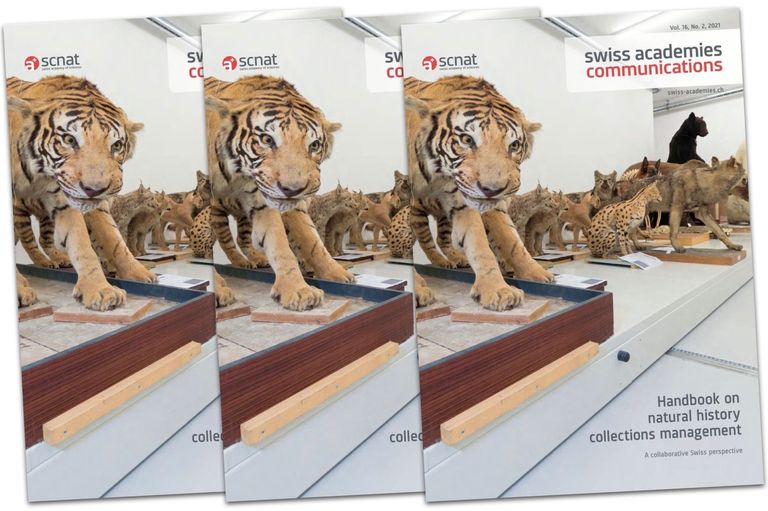
Handbook collections - horizontal cover
Handbook collections - horizontal coverImage: Akademien Schweiz
Image: Akademien Schweiz

Handbook on natural history collections management

A collaborative Swiss perspective

The handbook is one of SwissCollNet’s first measures to advance the exchange of knowledge on object and data management among Swiss collections. It contains instructions to modernize natural history collections of preserved biological materials and geological samples developed by experts and collections managers from across Swiss collection holding institutions.

Information and recommendations are given about:

covers the major topics related to a collection concept at the national level, starting with an introduction to the principal reasons for collecting, the history of natural history collections in Switzerland and the legislative framework surrounding the accession of specimens. The most important decisions to be made when developing a collection concept are described and examples covering geological, botanical, fungal and zoological specimens are presented.

covers the topics related to the storage of objects ranging from how a building should be constructed or renovated to considerations on shelving systems and the labelling of objects. Also addressed are the conservation and storage of wet collections, of dried botanical specimens, dried zoological specimens, of specimens from geological collections as well as storage of special collections such as microslides, scientific drawings, didactic collections, DNA and tissue samples.

addresses questions of preventive infrastructures to protect the collections from pest infestation and material damage or deterioration, object treatments before integration into collections, monitoring of storage conditions and detection of pest infestations. Recommendations are given for intervention and control after infestation of a collection. Examples on how to procure special protection for specimens from damage caused by handling, shipping or contact with fire and water are illustrated. Another important topic is the health of workers and measures to be taken to protect staff.

covers topics related to digital information on collection specimens such as mass digitization, unique identification of objects and data, data standards and data vocabularies, data handling and storage as well as on the production and publication of metadata from collection units.

Download the Handbook for free!

Learn more about